


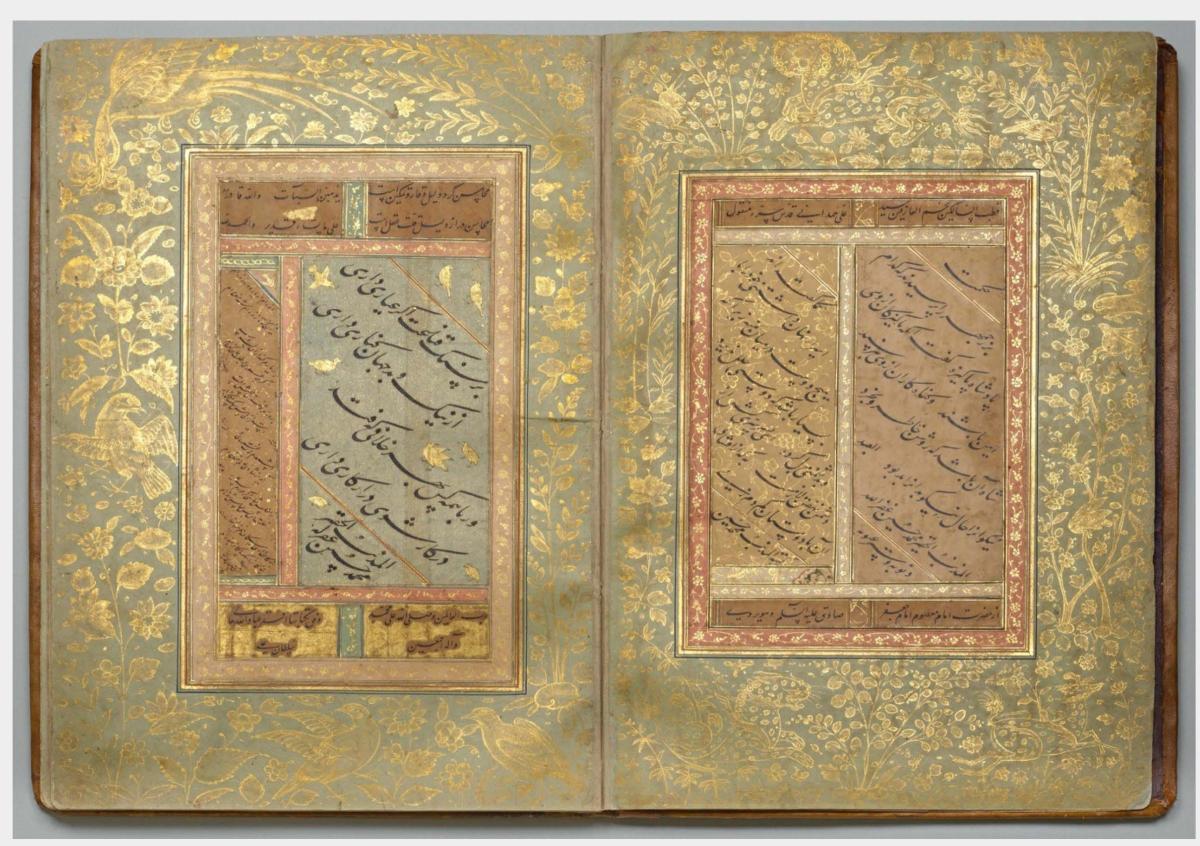
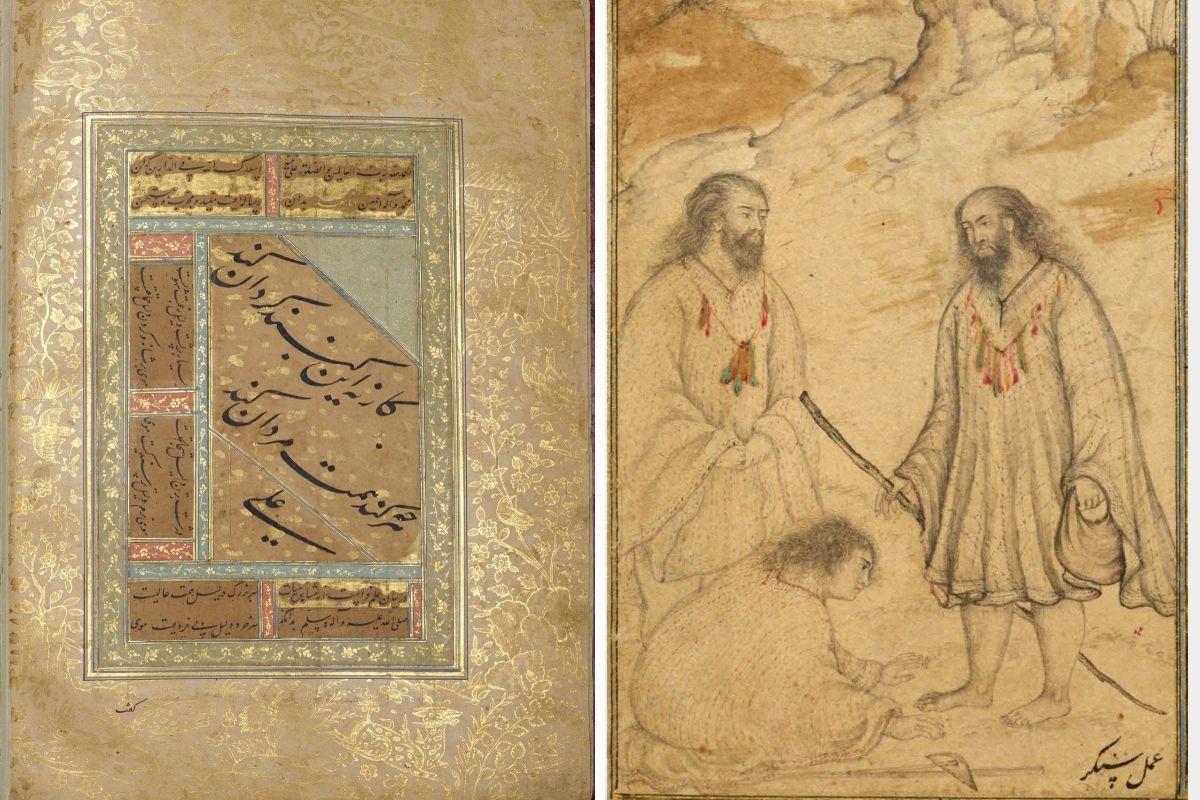

The government has banned the export of a collection of intricately detailed Mughal calligraphy.
The Mughal dynasty ruled much of the Indian subcontinent during the 16th to mid-19th centuries, creating an artistic legacy spanning architecture to portraiture.
This calligraphic work was created during a time of Mughal expansion under Emperors Akbar and Jahangir.
The two volumes of calligraphy include work from leading royal calligraphers, including Emperor Akbar’s preeminent calligrapher Muhammad Hussain Kashmiri, who was renowned for the outstanding intricacy and detail of his work.
Rare work from celebrated calligrapher Abd al-Rahim al-Haravi is also included.
The government placed a temporary export ban on the calligraphy volumes. The deferral period will 'give time for museums and galleries to raise the funds needed to acquire the volumes' or for a private individual to purchase them and donate them to the the UK.
The calligraphic works are thought to be over 400 years old. They are spread across 29 leaves, featuring gold decorations depicting plant and animal motifs.

Heritage Minister Baroness Twycross said: “Calligraphy of this quality and from such prestigious calligraphers is extraordinarily rare.
"These sheets hold secrets that researchers are desperate to unlock.
“Keeping these volumes in the UK, where the public and researchers can access them, will create a perfect opportunity to discover more about how they were created and the vital role they played in the history of diplomacy.”
RCEWA committee member, Caroline Shenton, said: “The sublimely beautiful leaves in these two volumes were created by the most outstanding imperial calligraphers and illustrators of the Mughal Court.
"There is much still to be discovered about the techniques used in their production, and the subsequent history of their dispersal and rebinding (including their relationship to similar folios now in the Royal Collection) which may only be undertaken if the physical volumes remain in this country for research.
"I therefore very much hope that a UK institution will step forward to ensure that they are not lost to the nation and to scholarship.”
The Minister’s decision follows the advice of the Reviewing Committee on the Export of Works of Art and Objects of Cultural Interest (RCEWA).
The decision on the export licence application for the volumes will be deferred for an initial period ending on February 15, 2027 inclusive in which expressions of interest from an appropriate purchaser to try and acquire them will be sought.
At the end of the first deferral period owners will have a consideration period of 15 Business Days to consider any offer(s) to purchase the volumes at the recommended price of £900,000.
The second deferral period will commence following the signing of an Option Agreement and will last for four months.


Share