


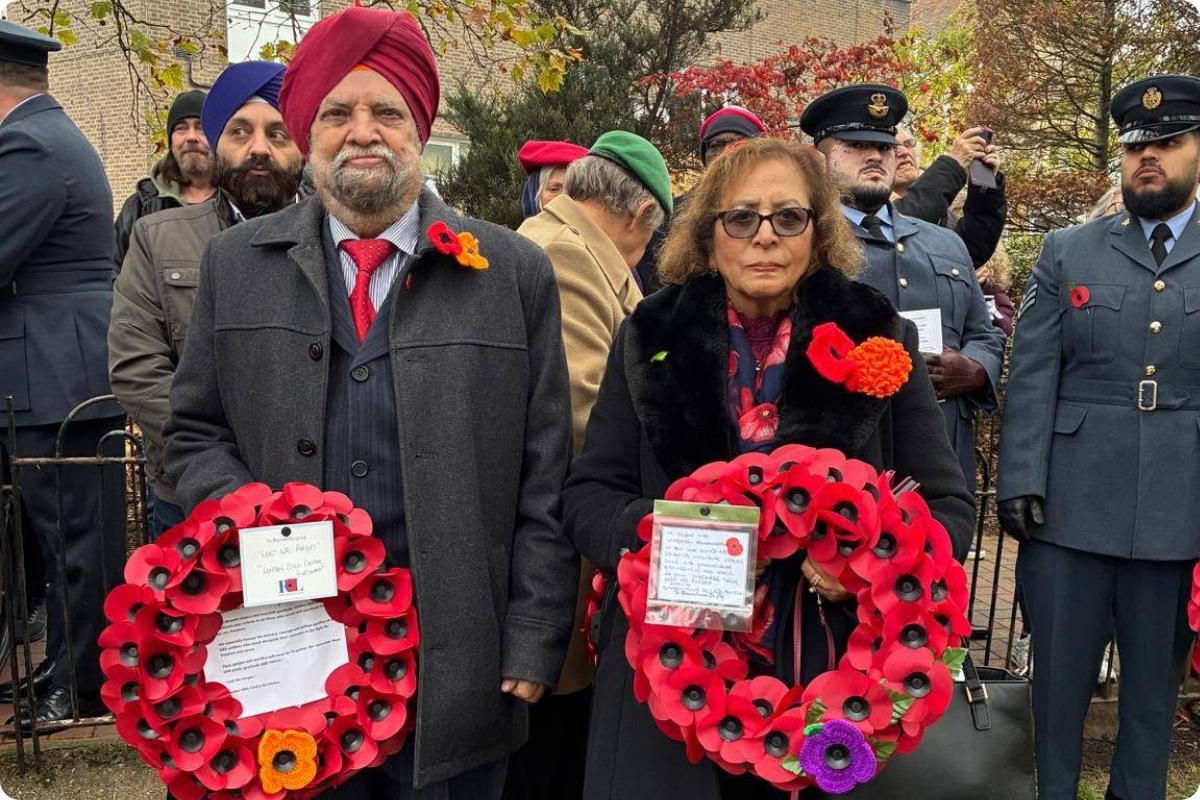
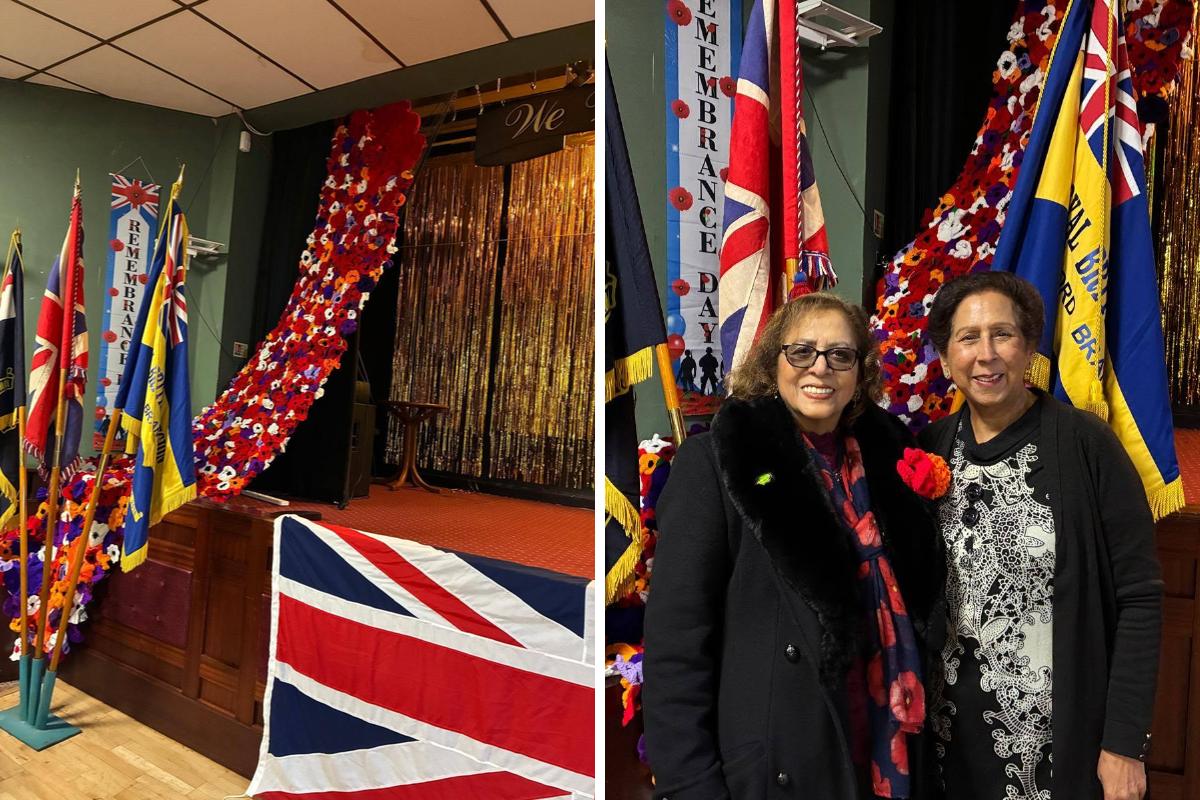

Thousands of orange poppies have been hand-knitted by Sikh women and community volunteers to honour Indian soldiers whose contribution to Britain's wartime history has often been overlooked.
The striking installation was unveiled in Greenford, west London, for Remembrance Sunday, alongside traditional red poppies.
The orange flowers were inspired by the Indian marigold and created as a tribute to servicemen from India and the wider Commonwealth who fought alongside British and Allied forces during the first and second world wars.
Each poppy was individually knitted by volunteers over several months before being brought together to form a large Poppy Curtain.
The project was conceived by Greenford resident Amarjit Jammu, with Sikh women, the KY Knitting Group, local volunteers and the Royal British Legion Greenford among those involved.

She said the idea came to her two years earlier after attending a retired members' conference in Llandudno, North Wales, where she saw large poppy installations around the town.
She wanted to create something similar back home, but with a visible acknowledgement of the Indian servicemen whose stories have not always featured prominently in Britain's remembrance traditions.
Amarjit said: "As a lifelong resident of Greenford, I feel immensely proud to see our community come together in such a meaningful act of remembrance.
"What makes this tribute especially moving is that it has been created by Sikh women whose families understand the true meaning of service and sacrifice."
For Jammu, the display is about more than the thousands of knitted flowers.
She said: "When I look at this curtain of poppies, I do not simply see a display.
"I see the faces of those who served, the families who waited for loved ones to return, and the generations who have carried their memories forward."
Read more
Gurdip was killed by racists at 18. His murder changed British Asian resistance
Sikh activist Jagtar Singh Johal granted bail after 9 years in Indian detention
'He crushed our dreams': Deaf couple's home transformed after DIY SOS rebuild
The installation comes amid growing efforts to give Indian servicemen greater recognition within Britain's wartime history.
The Commonwealth War Graves Commission has separately revealed that 9,909 Indian Army servicemen who had previously been missing from its casualty records are now being formally commemorated following a five-year research project.
For the volunteers in Greenford, the orange poppies offer another way of ensuring those sacrifices remain visible.
Rather than simply remembering numbers, every individually knitted flower represents a wider history of service, loss, and generations carrying memories forward.


Share